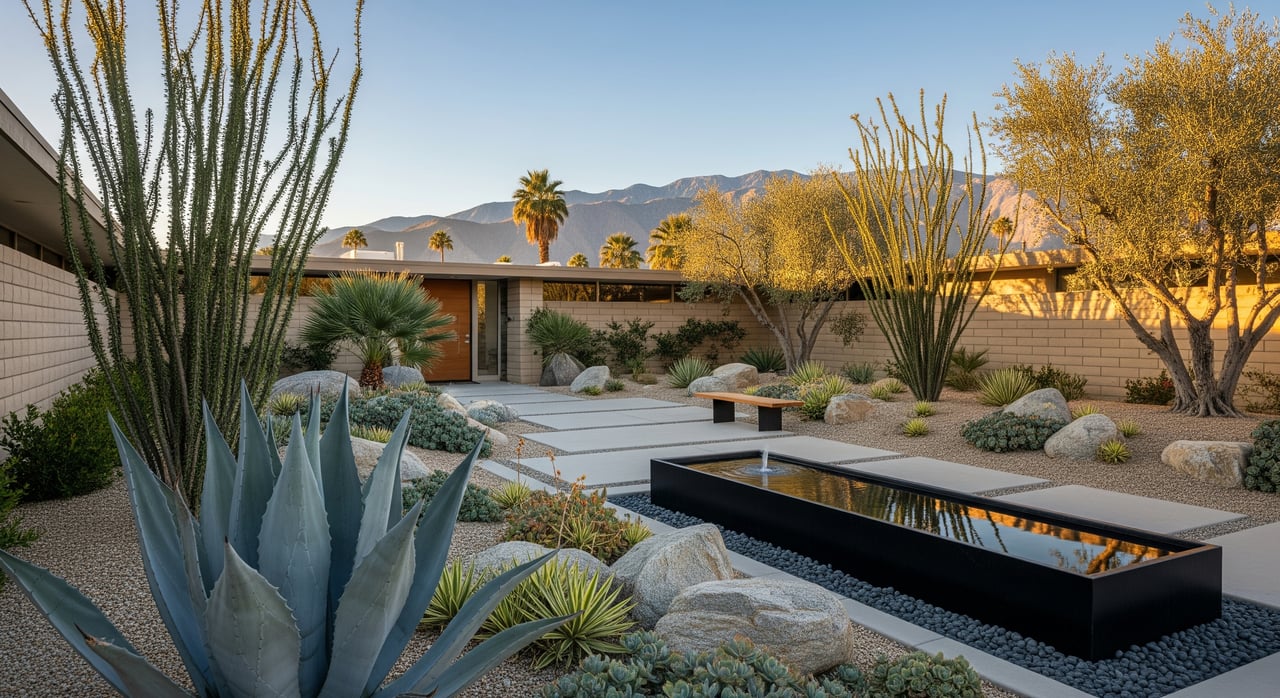
Tired of high water bills and thirsty lawns in a place that averages almost no rain each summer? You are not alone. In Palm Springs, buyers and owners want landscapes that look refined, take little work, and respect the desert. In this guide, you will learn practical xeriscape ideas that reduce water use, boost curb appeal, and support your resale or rental value. Let’s dive in.
Why xeriscaping works in Palm Springs
Palm Springs sits in a hot desert climate with very hot summers, intense sun, and low annual rainfall. Plants must handle heat and drought, and irrigation needs to be efficient. Outdoor water savings are meaningful because irrigation can be a big share of residential use in desert climates.
Local water agencies place strong focus on cutting outdoor use, especially turf. In the Coachella Valley, agencies such as the Desert Water Agency, Coachella Valley Water District, and the Metropolitan Water District often offer landscape consultations, turf removal incentives, and smart controller rebates. Programs change over time, so you should verify current offerings before you plan.
For buyers and sellers, this matters. Many Palm Springs buyers expect drought‑tolerant, low‑maintenance landscapes that fit the desert aesthetic and lower utility costs. A well‑designed xeriscape signals care, reduces ongoing expenses, and can help a listing stand out.
Design moves that add value
A landscape that reads as intentional from the street sets the tone for your home. Focus on structure, texture, and seasonal color so the yard looks finished, not barren. You want beauty, water savings, and easy upkeep all at once.
Plan with hydrozones
Group plants by water needs and irrigate each zone separately. Keep higher‑water accent plants near entries or patios and place true drought stars elsewhere. This approach cuts waste and makes scheduling simple.
Right plant, right place
Match plants to sun exposure, reflected heat off walls and paving, and wind. Place heat‑tough species where afternoon sun is strongest. Save shadier spots for plants that prefer filtered light. Good placement reduces stress and water use.
Balance hardscape and greens
Blend decomposed granite, crushed rock, or pavers with layered plantings. Use permeable paths and patios to add usable space without adding water demand. Keep lines clean, scale materials to the home, and avoid over‑paving.
Lead the eye to the entry
Buyers respond when the front walk is clear, framed, and welcoming. Create a sightline from curb to door with low plantings and crisp borders. Use boulders or a specimen succulent to mark the turn toward the entry.
Add focal points
A single sculptural agave, a desert willow with seasonal flowers, or a cluster of boulders can create a strong focal moment. Keep focal elements simple and repeat select textures for harmony. Less clutter reads as more upscale.
Avoid common pitfalls
- Do not rely on rock alone. Add plant variety, color, and texture to prevent a sparse feel.
- Use artificial turf only where it truly fits. Quality and neighborhood expectations vary, and some buyers dislike it.
- Avoid repeating the same plant everywhere. Mix forms and heights for depth.
Palm Springs plant palette that performs
Choose plants that love heat, handle drought, and bring color through the year. Mix trees for shade, shrubs for structure, and succulents for sculptural interest.
Trees and large structure
- Palo verde for airy shade and spring color
- Desert willow for summer blooms and a light canopy
- Mesquite for filtered shade and desert character
- California fan palm for a regional, vertical accent where space allows
Shrubs and flowering perennials
- Brittlebush and desert marigold for sunny, daisy‑like color
- Salvias and penstemons for long bloom windows and pollinators
- Rosemary as a drought‑tolerant hedge or accent
- Native sages to support bees and hummingbirds
Succulents and cacti
- Agave, aloe, and yucca for bold forms and low water needs
- Prickly pear for color and structure
- Teddy‑bear cholla only in appropriate locations with safe clearance
- Echeveria or sedum in protected microclimates for texture near entries
Groundcovers and low plants
- Lantana in drought‑tolerant varieties for continuous bloom n- Gazania for bright, low mounds
- Low‑growing California natives recommended by local native plant experts
Tip: Blend lighter rock mulch with green‑blue succulent tones and silver‑leaf shrubs to cool the look near windows and entries.
Smart irrigation and soil prep
Efficient irrigation delivers big savings without sacrificing health or color.
Efficient irrigation
Use drip irrigation and low‑flow micro‑sprays that target root zones. Pair your system with a weather or ET‑based smart controller that adjusts schedules to temperature and season. Meter outdoor use separately when possible so savings show up clearly on your bills.
Seasonal adjustments
Check emitters each season for clogs or leaks. Reduce watering during cooler months. Most desert‑appropriate plants need very little water in winter.
Soil and site preparation
Desert soils often drain fast. Add organic matter at planting to help new plants establish. Grade the site to move water away from the foundation and prevent pooling. Plan for root protection around palms and larger succulents.
Materials that look and last
Choose finishes that match the desert setting and handle heat.
- Decomposed granite, crushed rock, and pavers offer low‑water texture and clear paths.
- Permeable or stabilized gravel on drives and walks reduces runoff and improves infiltration.
- Rock mulches are common, but dark rock can increase reflected heat near walls and glass. Use lighter hues close to the home and pair with plants to soften temperatures.
Costs, rebates, and value
Conversion costs vary by scope and materials. Budget items include turf removal, irrigation retrofit, new hardscape, plant material, and labor. Install larger specimens if you need instant curb appeal, but expect a higher cost per plant.
Check local rebate programs for turf replacement and irrigation upgrades. Agencies serving Palm Springs have historically offered incentives for smart controllers and water‑wise landscapes. Because programs change, confirm eligibility and application steps with your current water provider before you begin.
As for value, high‑quality xeriscapes often improve marketability in hot, arid markets. Buyers respond to lower utility costs, lower maintenance, and a finished look. Exact dollar returns vary by neighborhood, installation quality, and buyer preferences. If you plan to sell, keep utility bills, rebate receipts, and any professional plans on file. This documentation helps your agent showcase operating savings and design quality.
Rules, HOAs, and safety
Permits and codes
California’s Model Water Efficient Landscape Ordinance guides water‑smart standards for new landscapes and significant remodels. Routine planting updates usually avoid permits, but grading, structural walls, irrigation mains, and tree removals can trigger reviews. Check with the City of Palm Springs building and planning departments for thresholds.
HOA guidelines
Many Palm Springs communities have HOA landscape rules. You may need approval for front yard changes and specific plant lists. Confirm guidelines early to save time and avoid rework.
Fire safety and defensible space
The region faces wildfire risk, especially near foothills and during wind events. Follow defensible space best practices by keeping plants trimmed near structures, choosing lower‑flammability selections close to the home, and removing dry material. Well‑placed succulents and irrigated shrubs near the house can lower ignition risk compared to resinous plants.
Maintenance made simple
Xeriscapes are lower maintenance, not zero maintenance. Expect seasonal pruning, emitter checks, weed removal, and periodic mulch top‑offs. Some desert trees drop seasonal litter, and palms need occasional frond cleanup.
Most plantings take 1 to 3 years to fully establish and look their best. Water more carefully during establishment, then taper. If you want an immediate finished look, use a few mature specimens at key focal points and fill with younger plants elsewhere to balance cost and impact.
Quick seller checklist
- Photograph a clean, staged entry with crisp edges and swept paths.
- Document before and after water bills showing savings.
- Save rebate approvals, receipts, and any design plans.
- List plant warranties and recent maintenance, like irrigation tune‑ups.
- Refresh mulch and remove weeds before going live.
- Add nighttime path lighting to highlight focal plants and guide the entry.
For short‑term rental owners
If you operate a vacation rental, xeriscaping lowers operating costs and helps with guest experience. Durable paths, tidy plant beds, and simple irrigation schedules reduce service calls. Use clear care guides for your property manager, including seasonal irrigation settings and plant notes. A photogenic entry with a sculptural succulent or blooming desert willow can also elevate your listing photos.
Next steps
If you want to upgrade your Palm Springs landscape, start with a clear concept, a realistic budget, and bids from desert‑experienced designers and contractors. Document savings and improvements for your records and future listing.
When you are ready to buy, sell, or plan an ROI‑minded refresh around a future sale or rental, connect with the team that blends design savvy with investor discipline. Reach out to the Jacobellis Group - Bayside Real Estate Partners for a Private Consultation and a plan tailored to your property.
FAQs
Will xeriscaping raise my Palm Springs home value?
- It can improve marketability and perceived value when design quality is high, while also lowering water and maintenance costs that buyers appreciate.
How much water can I save by removing turf?
- Savings vary, but turf‑to‑xeriscape conversions typically deliver the largest outdoor reductions, especially with drip irrigation and smart controllers.
Do I need permits to redo my front yard?
- Small planting changes usually do not, but grading, structural walls, irrigation mains, or significant tree removals may, so check with the city first.
Will my HOA allow rock and cactus in the front yard?
- Many HOAs do, but rules differ by community; confirm plant palettes, materials, and approval steps before you start.
What maintenance should I expect after installation?
- Plan for seasonal pruning, irrigation checks, weed control, and occasional mulch top‑offs; expect more attention during the first 1 to 3 years.
Is artificial turf a good idea in Palm Springs?
- It can reduce water use compared to live turf, but heat, lifespan, and neighborhood preferences vary, so use selectively and confirm HOA rules.
Do rocks make my home hotter?
- Dark rock can reflect heat toward walls and windows; choose lighter tones and mix in plants near the house to soften temperature impacts.